Canvas to chain.
Right build. Late wave.
A painter with a fifty-year career. Tens of thousands of originals, plus prints, art books, fabrics and furniture. All of it physical, none of it digital. Notable brought us in to change that, and we spent twenty months building the machine that would do it.
Phil’s job on this one was artist onboarding, creating the asset offering, and producing the sales platform.
Do not sell crypto to an art audience.
Sell art, and let the chain sit underneath doing plumbing. The audience already buying this artist was a physical-art audience, roughly 150,000 of them following along at the time, and they wanted something on a wall, not something in a wallet. So every digital piece was designed to come bridged to an archival print and a certificate of authenticity.
To this point his art has been all in the physical world and this will be his first foray into the world of digital art.
Artist proposal v2 · our own words, August 11 2022
We derisk the offering by laying the strong foundation of a traditional print offering ‘bridged’ to the experiences that digital art has to offer.
Digital Offering v1 script · our own words, February 2023
Notable’s mission is to bridge the worlds of digital and physical art.
Digital Offering v1 script · February 2023
Twenty months, and the strategy line never changed.
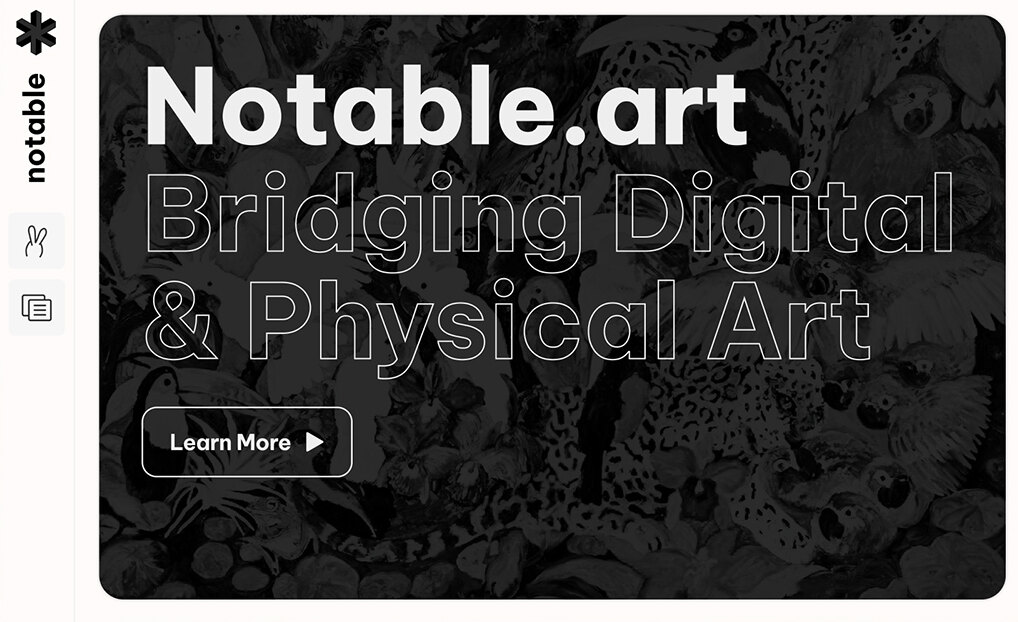
Proposal to archive, August 2022 to April 2024.
Eleven traits into 991 works.
The rarity system was designed by hand and then generated by code. Weather is the multiplier that does the heavy lifting: five tint levels applied across everything else, which is how a handful of source paintings becomes an edition. Titles came out of the generator too, built from time of day and background color.
| Tier | Pieces | Share | Distribution |
|---|---|---|---|
| Common | 572 | 56.58% | |
| Uncommon | 153 | 15.13% | |
| Rare | 182 | 18.00% | |
| Super Rare | 74 | 7.32% | |
| Epic | 30 | 2.97% |
Rarity Table v2, 1011 rows, March to April 2024. The flagship was fixed at 991 works two months earlier, so the table carries twenty rows more than the series; nothing in the archive says why, and we are not going to guess. Rare outnumbers Uncommon in the table as built. That’s what the file says, so that’s what we print.
- Subject rarity
- Single 80%, Duo 15%, Multiple 5%.
- Days of the year
- 24 flagged uncommon, 14 flagged rare, the rest common.
- The eleven traits
- Subject count, background type, background color, foreground brush color, day of year, time of day, weather, brush color variations, brush style, subject position, print size.
- Designed behind it
- Four follow-on collections: Elegant at 200 works, then Radiant, Romantic and Social at 1000 each.
Built for people who did not want to learn crypto.
The whole point of the bridge was that a collector could buy the way they already buy. Card checkout, print on the wall, certificate in the box, and no seed phrase in sight unless you went looking for one.
Because digital art does not display well on your phone, we offer an archival print of your unique artwork from the drop to display on your wall.
Post-gala memo · February 2024
A test series of 60, a live series of 12.
The April 2024 architecture took the existing minting work in React and extended it to handle both crypto and fiat for the 991-piece series. Contract management ran through Thirdweb, the existing crypto path was left alone, and the series were stood up test-first: 60 on Sepolia before 12 went live on Ethereum mainnet.
A wallet made from an email address.
If you pass an email into the crossmint fiat flow, it will create a wallet and email users on how to connect. This is a strong company want as the stakeholders were expecting a custodial wallet solution for purchasing.
Minting 1.5 architecture · April 2024
Because blockchain can be hard to manage, by default, we enroll your NFT and digital artwork into our concierge service which is available for you to use to manage your digital purchases, make recommendations, and notify you of opportunities.
Post-gala memo · February 2024
Notable uses Shopify to fulfil the fiat order requests for the digital artwork on the blockchain. We have built a fulfillment service that integrates with a contract minting the digital works when the purchase is executed.
Order Fulfillment · February 2024. One asset was already generated live through it.
The countdown to the art unboxing brings everyone that has a box together to experience the same moment. At the same moment, everyone with a box will have a random drop of digital artwork allowing everyone to appreciate the unique works and appraise the rarity.
Digital Offering v1 script · February 2023
Art direction to the digital artist, written at 400% zoom in January 2024.
There’s tons of little hairs and dust. As I see, this issue is on every piece. Maybe taking 5 minutes on each one and manually cloning out the hair/dust that is obvious could be worth doing. The fear is it will be noticeable on the prints.
Print Works Adjustments · January 31 2024
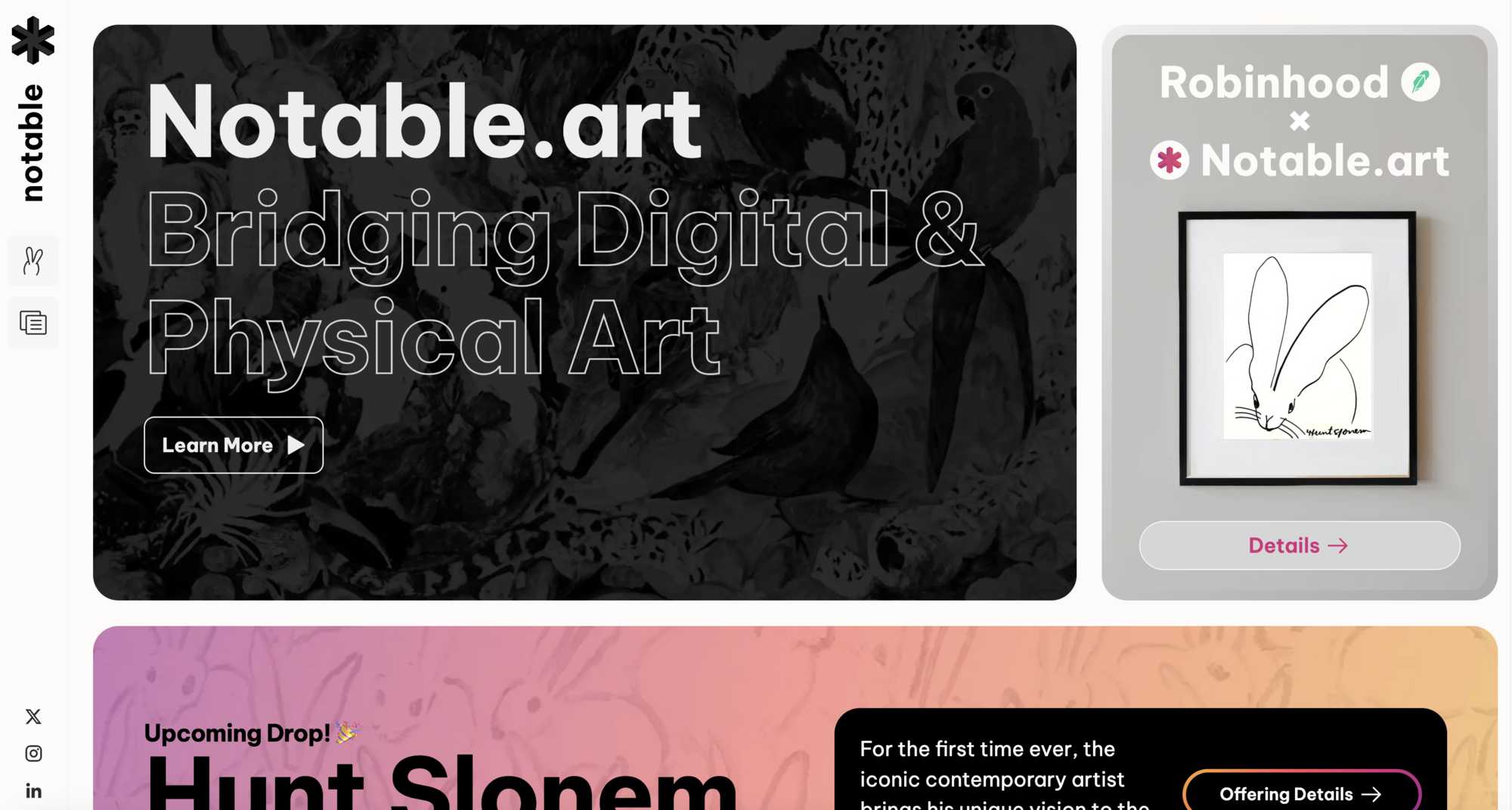
We took physical works and
blockchain enabled them for sales.
That is Phil’s sentence, and it is the shortest true description of twenty months. Everything above is how; that is what.
Deciding what the thing was before deciding how it worked.
The scoping on the decentralised application: what a collector would actually do, in what order, and which of the chain’s capabilities earned a place in front of them. Most of the answer was subtraction.
We built them.
The dashboard surfaces are ours as code, not as a document handed to somebody else. This page described this engagement as architecture and specification for a long time, because specifications are what the drive kept.
The offering was a product, not a listing.
The generated edition, the rarity model behind it and the machinery that turned a canvas into something a person could buy on a card and hang on a wall. That is the piece that made a physical work sellable on a chain without asking the buyer to care about the chain.
From Phil’s account rather than the project drive. The drive kept the architecture documents and the asset archives; it did not keep what was built from them.
The wave passed while we were still building.
February 2024: the brand is unveiled at a gala and the first real sales effort runs. The memo written straight afterward is a thank-you note and a warning in the same document.
I think there is confusion, both externally and internally, on what the business strategy is.
Keep it Simple, Keep it Separated.
we must create things that sell, as real artists ship.
Our own memo, written days after the gala. That last line is still the standard this practice runs on.
Two months later the record stops. Twenty-one finished pieces, fully titled and attributed, are catalogued as unused. The assets are zipped into a 224 MB catalog and a 4.1 GB bundle. The drive itself stops there.
The 991 went public and live, with a show in New York.
Phil was there. That is the ending the project drive does not have and could never have had: the files stop in April 2024 with twenty-one finished pieces catalogued as unused, and for a while this page read that silence as the answer and said the drop never went out. It went out, and somebody from this shop stood in the room while it did.
The archive stopping is a fact about the archive. We are leaving that sentence here rather than quietly correcting the page, because how this one got written wrong is worth more than the correction.
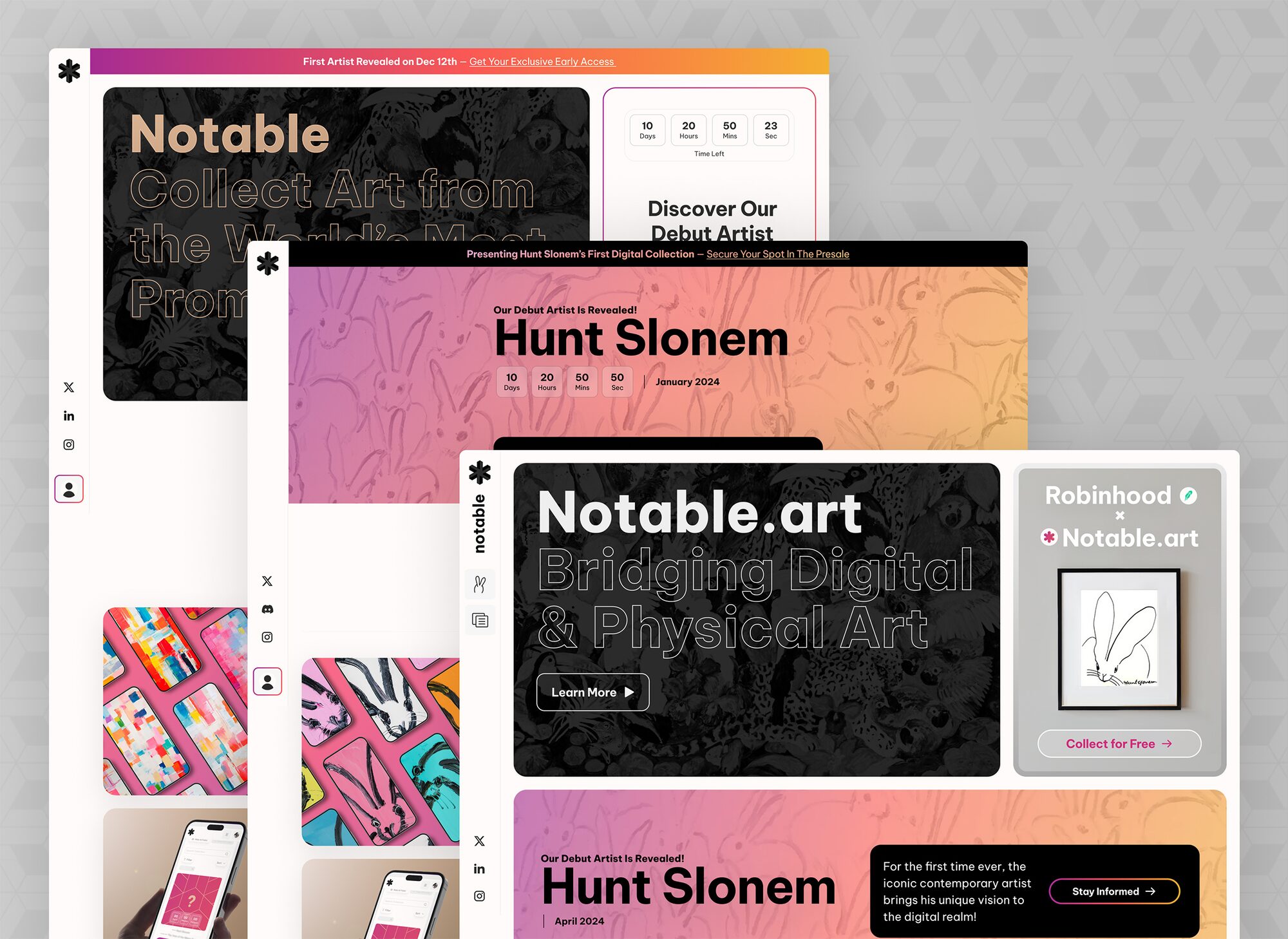
Right build. Late wave.
NFTs were cooling before the machine was done, and the offering pivoted toward art print sales. We were early to the exit and late to the wave, and by then the room was not sure what it was selling.
The bridge held. Print, certificate, fulfillment, and a checkout that took a card.
Build the thing collectors already want and let the technology be plumbing. That call was right, and we make it again now with AI in the seat the chain used to sit in. The costlier lesson was that a working machine does not sell itself.
Aug 2022 to Apr 2024 · 20 months · 2 artists into the pipeline · ~30 canvases digitized · 5 locked masters · 991 works designed · 1011 rows generated · 21 finished pieces never released
What the files hold, and what they do not.
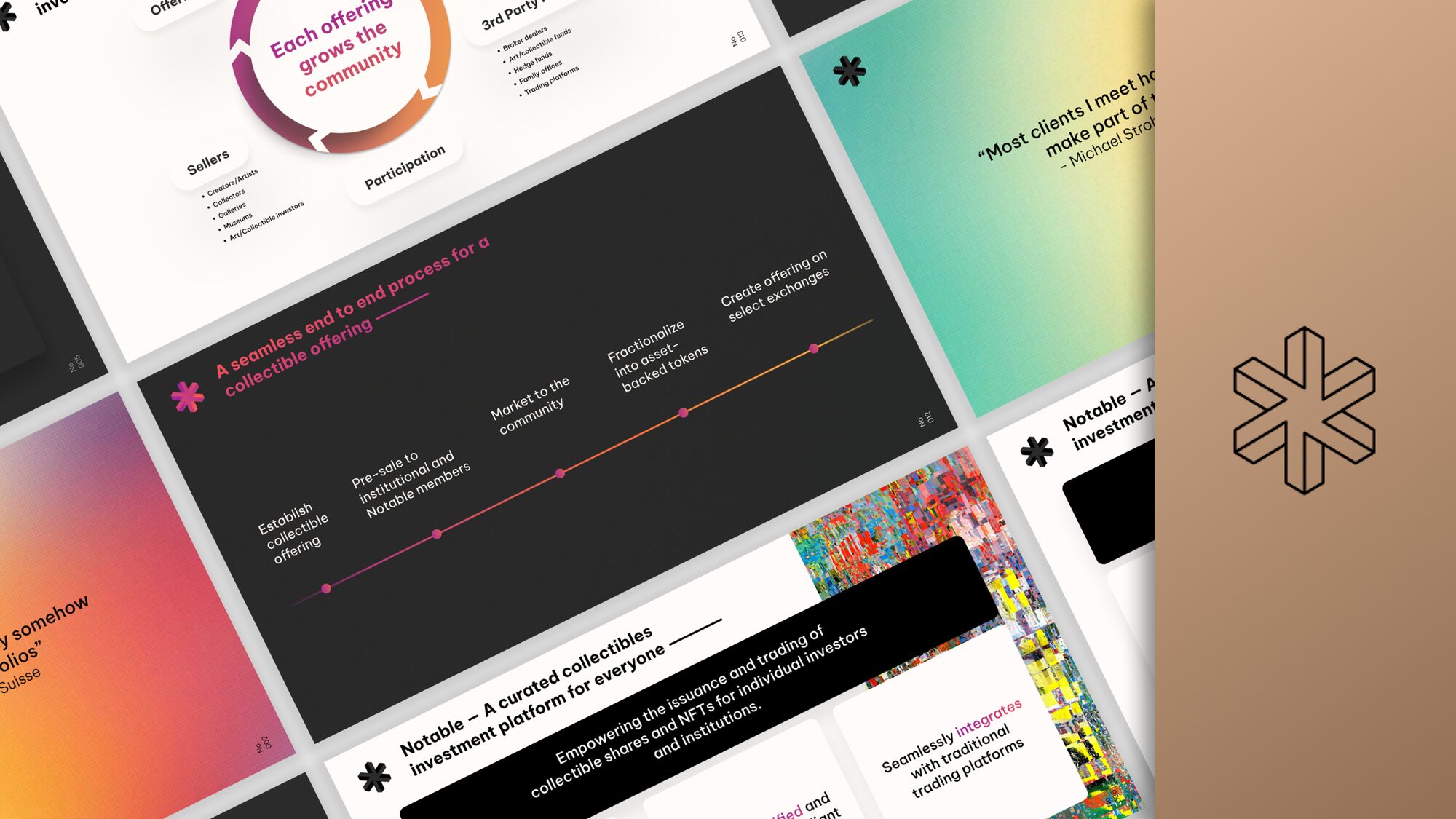
This page is built from working documents dated August 2022 to April 2024: the pitch deck and artist proposal, the discovery presentation and platform spec, per-file art direction to the digital artist, the rarity tables and generator script, the minting architecture, the order fulfilment write-up and the post-gala memo. Every step on the timeline has a document behind it and the dates are the document dates. Quotes marked as our own words are lifted from those documents unedited. The figures are published on innovationtheory.com; Fig. 01 is a detail from a platform composite.
Where the record disagrees with itself. Rarity Table v2 carries 1011 rows and the flagship was fixed at 991 works two months earlier, so the table has twenty rows more than the series. Nothing in the archive explains the twenty and we are not going to guess. Rare outnumbers Uncommon in the table as built; that is what the file says, so that is what is printed.
What the archive does not reach. The drive stops in April 2024 with twenty-one finished pieces catalogued as unused. It holds no record of the public launch, and for a while this page read that silence as an answer and said the drop never went out. It did — the correction is in the open, above, rather than quietly applied. What the record does prove shipped to a buyer is one asset generated live through the Shopify-to-mint path in February 2024.
How AI would help
this now.
Everything above this line is in a file somebody can open. Nothing below it is. This is how we would run the same engagement today, with AI in the work — written as an opinion, because that is what it is.
The rarity engine — eleven traits, 1011 rows, a generator that multiplies an edition out by weather — is a model’s natural habitat. The minting architecture, the Shopify fulfilment integration, the concierge flow and the custodial-wallet path would all draft faster today, and the print-quality pass that caught hairs and dust at 400% zoom is now a machine-vision job rather than an eye and a Wednesday.
It would not have told us to stop saying blockchain.
The decision that made this product coherent was a subtraction: no seed phrase, no wallet jargon, a card at checkout and a signed print on the wall. Ask a model to build an NFT platform and it leads with the chain, because that is what the training data does. Knowing that an art audience does not want to hear the word came from being in the room with them.
This one started with a question.
The free assessment works whether you built the system, bought it, or inherited it. Timing is the part nobody checks. The assessment checks it. Two days, no charge, answered in writing.
Let’s find outNot ready? Take the Guide: the six rules with checklists you can run yourself. Free. No email required.